

Table of Contents
- Introduction
- The Health Impact of Climate Change
- The Role of Advanced Nations
- The Influence of Doctors
- Collaborative Action
- Conclusion
Introduction
The intersectionality between health and sustainability is a topic of paramount importance in contemporary discussions on climate change. Advanced nations, with their extensive resources and influence, play a decisive role in shaping environmental policies. Similarly, the medical community, with their intrinsic commitment to human well-being, also has a crucial part in this arena. There are three compelling reasons why this topic is significant:
• The health implications of climate change are far-reaching and severe.
• The advanced nations have the capability and responsibility to mitigate these effects.
• Doctors, as custodians of public health, are uniquely positioned to advocate for sustainable practices.
The Health Impact of Climate Change
Climate change poses a grave threat to global health, with potential repercussions including increased prevalence of vector-borne diseases, malnutrition due to food scarcity, and mental health issues arising from climate-related disasters. Medical professionals are at the forefront of managing these health crises, giving them firsthand insight into the catastrophic effects of environmental degradation. Their experiences and observations can provide invaluable evidence to inform policy decisions and galvanize public support for sustainable initiatives.
The Role of Advanced Nations
Advanced nations, with their significant contributions to global greenhouse gas emissions, bear a substantial responsibility for mitigating the effects of climate change. These nations have the financial resources, technological capabilities, and political influence to implement effective environmental policies and promote sustainable practices. Furthermore, their actions set a precedent for the rest of the world, making their commitment to environmental protection all the more crucial.
The Influence of Doctors
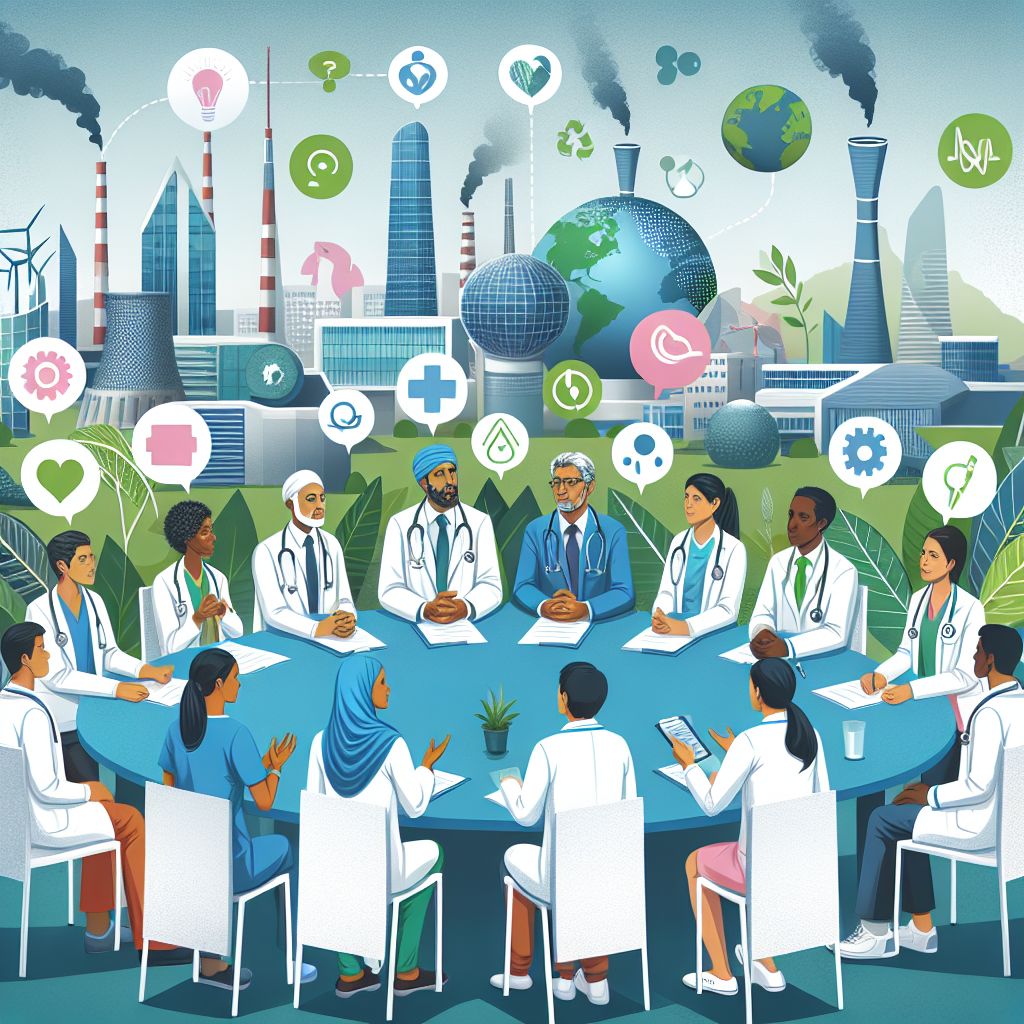
Doctors, with their duty to protect public health, can play a pivotal role in addressing climate change. By advocating for sustainable practices within the healthcare sector, they can contribute to a significant reduction in greenhouse gas emissions. Furthermore, their trusted status in society allows them to raise awareness about the health implications of climate change and promote behavioral changes that support sustainability.
Collaborative Action
The challenges posed by climate change demand a coordinated response from all sectors of society, including advanced nations and the medical community. These stakeholders can leverage their resources and influence to foster a culture of sustainability, promote research into climate-friendly technologies, and implement policies that prioritize environmental protection. Their collaborative efforts can significantly contribute to mitigating the health impact of climate change.
Conclusion
In conclusion, advanced nations and doctors play an integral role in addressing the health implications of climate change. Their combined efforts in shaping environmental policies, promoting sustainable practices, and raising awareness about the intersectionality of health and sustainability can lead the charge in the global fight against climate change. This collaborative approach is not just beneficial, but essential for the survival and well-being of future generations.
It is important to understand that the battle against climate change is not solely the responsibility of governments, corporations, or environmental organizations. It is a collective effort that involves each and every one of us. We are all part of this interconnected ecosystem, and our everyday actions can have a significant impact on the environment. Simple lifestyle changes like reducing waste, conserving energy, and supporting sustainable businesses can make a huge difference.
Moreover, education plays a crucial role in this struggle. It is through education that we can raise awareness about the urgent need to address climate change. By empowering individuals with knowledge about the environmental impacts of their actions, we can inspire them to make more sustainable choices. In this way, education can be a powerful tool for transforming attitudes and behaviors, and ultimately, for promoting a more sustainable world.
Additionally, the role of technological innovation in combating climate change cannot be understated. The development and implementation of green technologies, such as renewable energy sources, can significantly reduce our carbon footprint. These technologies not only provide a sustainable alternative to fossil fuels, but they also offer economic opportunities. Investing in green technology can stimulate job growth, drive economic development, and promote a sustainable future for all.
In conclusion, the fight against climate change requires a multifaceted approach that combines individual action, education, and technological innovation. By working together, we can create a sustainable future for ourselves and generations to come. The challenge is great, but so is the opportunity. Let us seize it and pave the way for a healthier, more sustainable world.
The time to act is now. Our planet is at a critical juncture, and the decisions we make today will inevitably shape the world we pass on to future generations. Let us not be the generation that stands by idly as our world deteriorates. Rather, let us be the generation that makes a stand, that takes decisive action to protect and preserve our environment. We must harness the power of innovation, technology, and collective action to address the urgent environmental issues of our time. From global warming to deforestation, from plastic pollution to the loss of biodiversity, these challenges are vast and complex but certainly not insurmountable.
Our actions today will echo in eternity. Therefore, we must approach these issues with a sense of urgency, responsibility, and optimism. We must be willing to rethink and reimagine how we live, how we work, how we consume, and how we relate to nature. We must learn from our past mistakes and strive to build a world that is in harmony with nature, rather than in conflict with it. To create a sustainable future, we must first envision it. We must dare to dream of a world where clean energy is the norm, where our oceans are free of plastic, where every species is valued and protected, and where every human being has access to clean air and water.