

Table of Contents
- Introduction: Climate Crisis and the Role of Developed Nations and Medical Professionals
- Policy-Making in Developed Nations
- Healthcare and Climate Change
- Medical Professionals as Advocates
- Responsibility of Developed Nations
- The Power of Collaboration
Introduction: Climate Crisis and the Role of Developed Nations and Medical Professionals
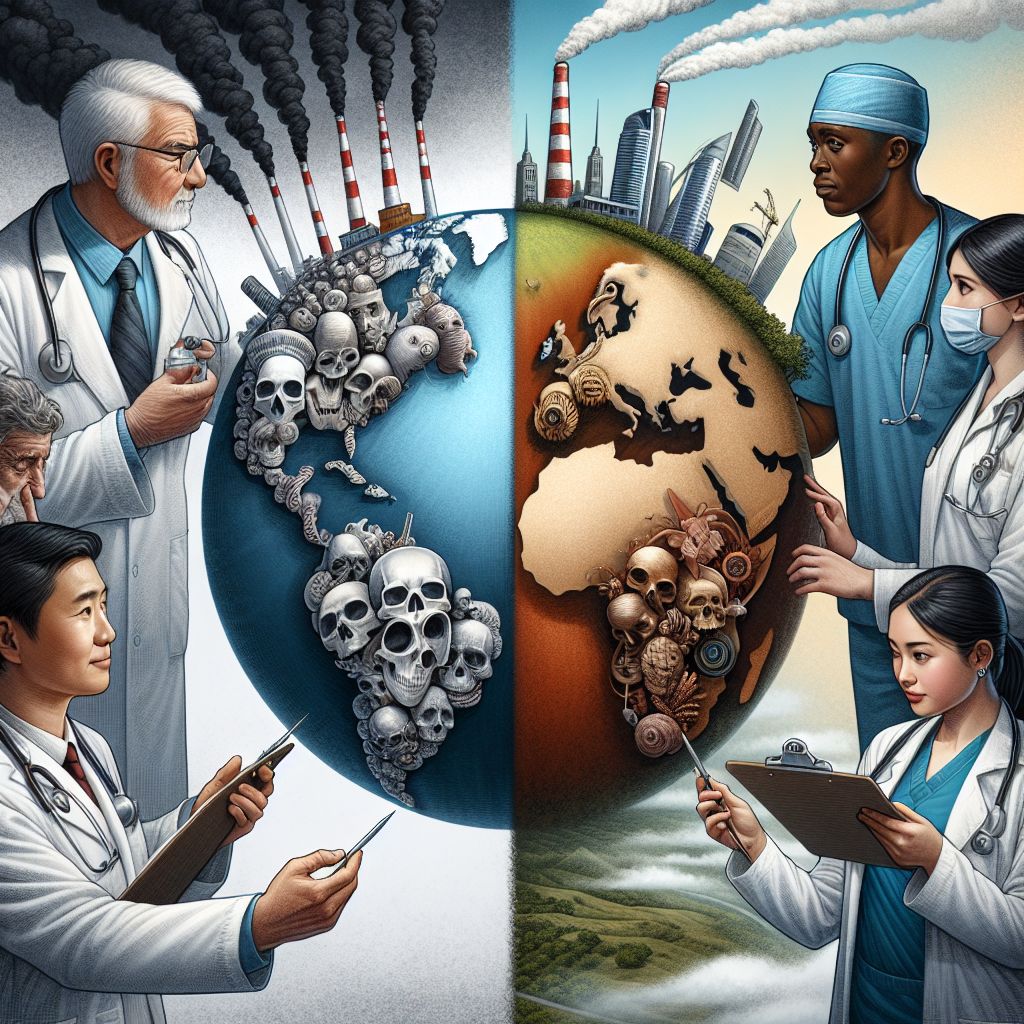
The climate crisis is an escalating global emergency that requires immediate and concerted action. It is not an issue that can be solved by individual nations, communities, or professions alone. Developed nations and medical professionals, in particular, have pivotal roles to play in addressing climate change. Their influence and resources can catalyze significant shifts towards sustainable practices and health-centred climate solutions. This article discusses the roles of civilized nations and their doctors in climate changes, focusing on three key areas: policy-making, healthcare, and advocacy.
• The role of policy-making in developed nations is critical and can significantly impact global climate change.
• Medical professionals play a crucial role in advocating for health-centred climate solutions and implementing them in their practice.
Policy-Making in Developed Nations
The actions and decisions of developed nations significantly impact global climate change. They are often the biggest contributors to greenhouse gas emissions, and their policies can either exacerbate or mitigate the climate crisis. As such, it is their responsibility to lead in implementing sustainable practices and policies. This includes transitioning to renewable energy, promoting sustainable agriculture, and investing in green infrastructure. Their policy choices can also influence other nations, setting precedents for climate action that can be followed globally.
Healthcare and Climate Change
Climate change has severe implications for global health, making it a critical issue for medical professionals. Warmer temperatures facilitate the spread of infectious diseases, while extreme weather events can cause injuries and disrupt healthcare services. Medical professionals need to understand these risks and adapt their practice accordingly. This could involve integrating climate health education into medical training, preparing for climate-related health emergencies, and advocating for the health benefits of climate action.
Medical Professionals as Advocates
Medical professionals can also play a vital role as advocates for climate action. They are trusted by the public and can use this trust to educate people about the health risks of climate change and the benefits of sustainable practices. They can also advocate at the policy level, pushing for health-centred climate solutions and sustainable practices in the healthcare sector. Through advocacy, medical professionals can help shift public opinion and policy towards climate action.
Responsibility of Developed Nations
Developed nations have a unique responsibility in addressing climate change. They have contributed the most to greenhouse gas emissions and have the resources to invest in climate solutions. It is their responsibility to lead in climate action, setting examples for other nations to follow. This includes not only implementing sustainable practices and policies at home, but also supporting developing nations in their climate action efforts. By doing so, they can help ensure global progress towards a sustainable future.
The Power of Collaboration
Addressing the climate crisis requires collaboration across nations, sectors, and professions. Developed nations and medical professionals, in particular, can have a significant impact by working together. By combining their resources, influence, and expertise, they can catalyze significant shifts towards sustainable practices and health-centred climate solutions. This collaboration can take many forms, from policy-making and advocacy to research and education. The climate crisis is a global emergency that requires global action, and it is through such collaborations that we can hope to address it effectively.
In fact, the climate crisis transcends borders and languages; it is a shared predicament that imperils all of humanity. As such, it necessitates a unified response. The severity of the crisis demands us to look beyond geographical limits, political divides, and cultural differences. The precarious condition of our planet calls for cohesive and comprehensive strategies to mitigate the effects of climate change and to transition towards a sustainable future. We must recognize that our actions, or lack thereof, today, significantly determine the state of the planet for future generations.
Moreover, engaging in collective action against the climate crisis is not merely a matter of environmental responsibility; it is also a moral imperative. Failing to address this issue in a timely and effective manner would be a grave injustice to both the Earth and its future inhabitants. We must not shirk this duty, but rather embrace it with fervor, for the survival and prosperity of our species depend on it. We must learn to adapt, innovate, and collaborate in ways we never have before. It is in our hands to shape a future that is not characterized by devastation, but rather by resilience and sustainability.
Given the urgency of the situation, it is heartening to see a surge in global collaboration on climate action. More and more individuals, organizations, and nations are recognizing the need for concerted efforts to combat climate change. They are pooling their resources, knowledge, and skills to devise innovative solutions and to push for necessary policy changes. This unprecedented level of cooperation is a beacon of hope in the face of an otherwise bleak outlook. It serves as a powerful testament to what humanity can achieve when it unites in the face of a common threat.