

Table of Contents
- Introduction
- The Ethical Implications
- The Socio-Economic Impacts
- The Health Repercussions
- Actions and Strategies
- Conclusion
Introduction
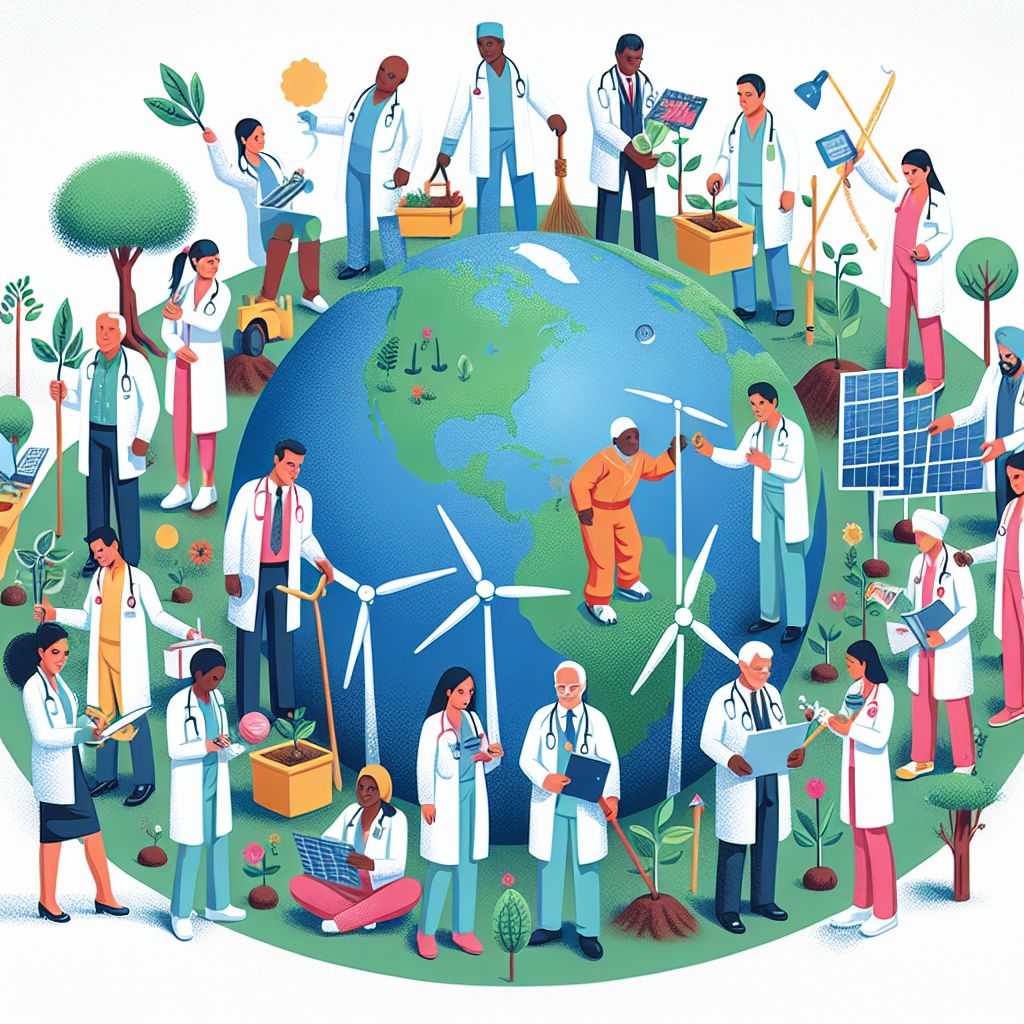
The increasingly palpable effects of climate change pose a significant threat to the global community, necessitating immediate action from all societal sectors. One such key player in this global crisis is the medical community. Doctors, in particular, bear a special responsibility towards this issue due to the health implications of a deteriorating climate. Developed nations, with their advanced resources and capacities, are also expected to shoulder a considerable portion of the burden to mitigate climate change. This article will explore the role of both these entities in the context of climate change, justifying their involvement based on three essential reasons: the ethical implications, the socio-economic impacts, and the health repercussions.
The Ethical Implications
The ethical dimension of climate change is profound, and it is here that the roles of doctors and developed nations intersect. Doctors have a moral duty towards public health, and climate change is increasingly becoming a public health concern. Developed nations, on the other hand, have reaped the most benefits from industrialization, which is a significant contributor to climate change. Therefore, it is only ethical that they contribute more towards the solution. As such, both doctors and developed nations have a moral responsibility to combat climate change.
The Socio-Economic Impacts
Climate change is not just an environmental issue, but also a socio-economic one. It exacerbates socio-economic disparities, particularly in developing nations where the effects are most severe. Developed nations, with their wealth and resources, have the capacity to provide support and alleviate these disparities. Meanwhile, doctors can influence policy-making and public opinion through their authoritative voices, thus advocating for socio-economic justice in the face of climate change.
The Health Repercussions
The direct health repercussions of climate change are alarming. Rising temperatures and extreme weather events can lead to a surge in different diseases and health conditions, from heat-related illnesses to mental health issues. Doctors are at the forefront of this battle, diagnosing and treating these conditions. Concurrently, developed nations have the resources and technologies to invest in research and development, improving health systems and policies to better respond to these climate-related health challenges.
Actions and Strategies
Given the roles and responsibilities outlined above, doctors and developed nations need to adopt various strategies to combat climate change effectively. Doctors can incorporate climate change into their medical practice, educating their patients about its health implications. They can also advocate for environmentally-friendly practices within their health institutions. Developed nations, meanwhile, can invest in renewable energy, enforce stricter environmental regulations, and provide financial and technical support to developing nations.
Conclusion
In conclusion, the roles of doctors and developed nations in combating climate change are multi-faceted and significant. Both entities have unique capacities and responsibilities that make them key players in this global issue. By acknowledging and leveraging these roles, we can pave the way towards a healthier, more sustainable future. However, it’s essential to remember that while they play a crucial role, the responsibility to combat climate change ultimately lies with all of us.
Individuals, corporations, governments, and non-governmental organizations all have a part to play in this global effort. As individuals, we can make daily choices that reduce our carbon footprint, such as opting for public transportation or biking instead of driving, reducing our consumption of meat and dairy products, and choosing to purchase from companies that prioritize sustainability. These acts, while seemingly small, can collectively have a significant impact if adopted by a large number of people.
On the corporate level, businesses have the power to make substantial changes in their operations that can drastically reduce their environmental impact. This can be achieved through various means, such as shifting to renewable energy sources, implementing energy-efficient practices, and investing in carbon offset projects. Many corporations are already taking these steps, not only because it’s the right thing to do, but also because it makes good business sense. Consumers are increasingly demanding that companies take responsibility for their environmental footprint and are more likely to support those that do.
Similarly, governments and non-governmental organizations have key roles to play. Governments can enact policies that incentivize green practices and penalize unsustainable ones. They can invest in renewable energy infrastructure, public transportation, and sustainable agriculture. Non-governmental organizations, on the other hand, can hold governments and corporations accountable, raise awareness about climate change, and provide resources for individuals and communities to take action.
In conclusion, while technological innovations are a vital part of the solution to climate change, the responsibility to act does not rest solely on their shoulders. Each one of us, in every decision we make, has the power to contribute to a healthier, more sustainable future. It’s time we fully embrace this responsibility and begin making the necessary changes in our lives and in our societies. The future of our planet depends on it.