

Table of Contents
- Introduction
- The Climate-Health Connection
- Physicians as Advocates
- The Scientific Perspective
- Doctors Leading by Example
- Conclusion
Introduction
The issue of climate change, a global concern of monumental proportions, has been a focal point in many sectors, including the medical community. Civilized nations, with their high levels of industrialization, bear a significant portion of the blame for the environmental damage. However, these same nations, particularly their doctors, are increasingly becoming part of the solution. This article explores the unique and crucial role that doctors in these nations play in addressing the impacts of climate change. The reasons for their involvement are threefold:
• Doctors are in a unique position to observe and report on the health impacts of climate change.
• Their trusted status in society gives them a powerful voice in advocating for environmental health.
• Their scientific background equips them to understand and communicate the complexities of climate change.
The Climate-Health Connection
Doctors see firsthand the toll that climate change takes on human health. Rising global temperatures lead to an increase in heat-related illnesses, while changing weather patterns contribute to the spread of infectious diseases. Air pollution, a significant contributor to climate change, is also linked to an array of health issues, including respiratory and cardiovascular diseases. Thus, doctors are uniquely positioned to connect the dots between climate change and health, providing an essential perspective in the climate change debate.
Physicians as Advocates
As trusted figures in society, doctors have a powerful voice in the climate change dialogue. They can use their influence to advocate for policies that promote environmental health, such as transitioning to renewable energy sources or implementing stricter pollution controls. Through public education campaigns, op-eds, and testimony before governmental bodies, physicians can help shape the public and political understanding of the climate change issue, emphasizing the urgent need for action.
The Scientific Perspective
Doctors, with their rigorous scientific training, are well-equipped to understand and communicate the complexities of climate change. They can help debunk the myths and misinformation that often cloud the public’s understanding of the issue. Moreover, their capacity to interpret and translate scientific studies into understandable language makes them effective educators. They can help the public understand that climate change is not just an environmental issue, but a pressing public health problem that requires immediate and robust action.
Doctors Leading by Example
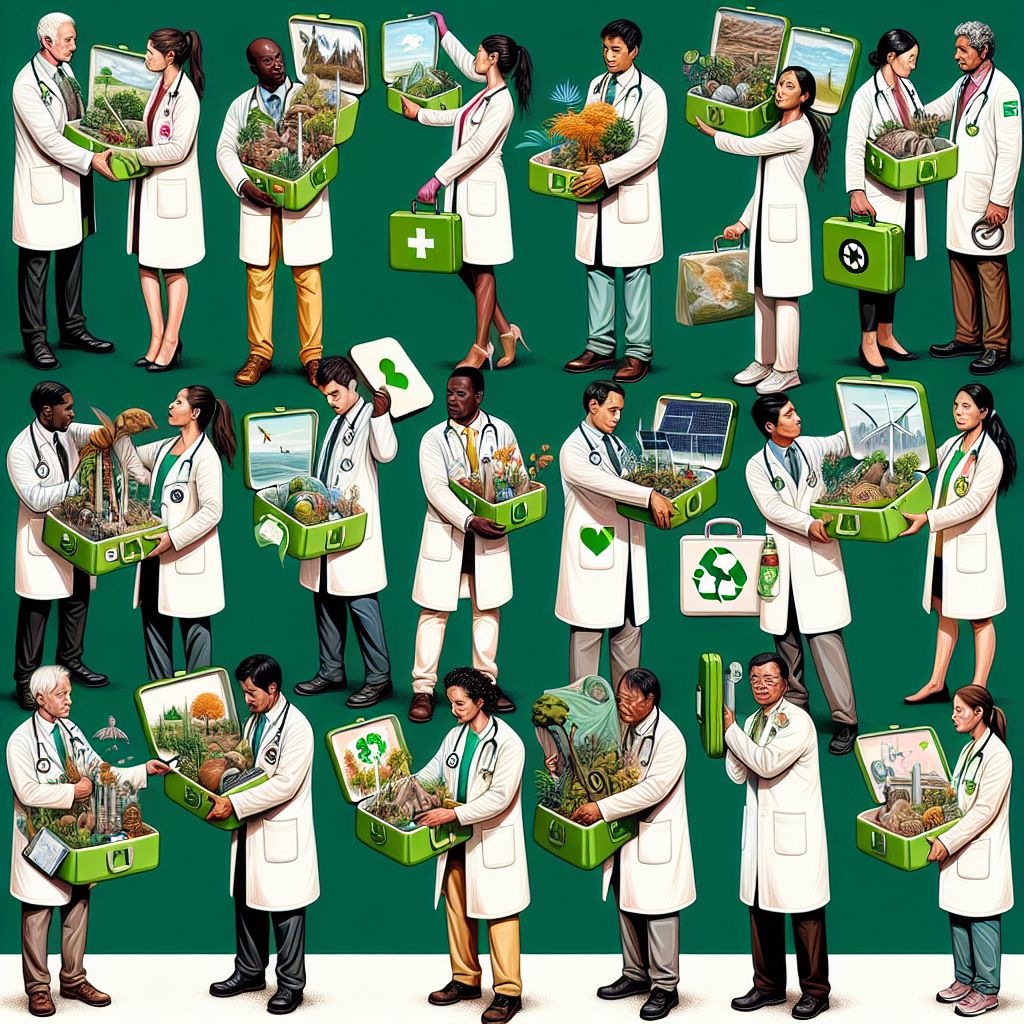
Many doctors are not just talking about climate change; they are taking concrete steps to combat it. For instance, some are working to reduce the carbon footprint of their practices, by implementing energy-saving measures, reducing waste, and supporting sustainable procurement policies. Others are involved in research to develop climate-smart healthcare strategies. By leading by example, doctors can inspire others to take action, showing that everyone, in every sector, has a role to play in addressing climate change.
Conclusion
The fight against climate change requires a multi-pronged approach, and doctors have a pivotal role to play. From linking climate change to health, advocating for environmental health policies, debunking myths, to leading by example, doctors are at the forefront of the climate change battle. As the healers of our society, their involvement in the fight against climate change is not just important; it is essential. It is a testament to the healing touch of doctors – a touch that extends beyond the confines of their clinics, reaching out to heal our ailing planet.
Change is the essence of life, an inevitable and constant process that shapes our world, including the medical profession. The healing touch of doctors does not stop at diagnosing and treating illness; it expands to include the wellbeing of our environment. Doctors, like everyone else, have a stake in the health of our planet, and they are increasingly recognizing this responsibility. They are not just physicians of bodies, but custodians of public health and the environment, as these elements are intrinsically linked.
The medical profession’s acknowledgment of this connection is a monumental shift in perspective. It marks the recognition of a broader concept of health – one that includes environmental sustainability. This change is more than a symbolic gesture; it is a commitment to a holistic approach to health. It underscores the understanding that the health of our planet directly impacts the health of its inhabitants. As such, doctors are broadening their scope of practice to include advocacy for environmental health.
By adopting environmentally friendly practices in their clinics, hospitals, and everyday lives, doctors are taking concrete steps towards a healthier planet. They have begun to understand that their actions and decisions can have a significant impact, not just on individual patients, but on the future of global health. This change is not just about adopting green practices; it’s about reshaping the way we think about health and wellbeing. It’s about recognizing that we all are stewards of our planet, and that our actions today will determine the health of future generations.
Ultimately, the shift towards environmental health is a testament to the adaptability and dedication of the medical profession. It serves as a reminder that change is not only necessary but beneficial. Just as doctors heal patients, they can also play a crucial role in healing our planet. The healing touch of doctors, therefore, extends far beyond the individual, reaching out to the entire world. This shift in perspective is not just essential; it is revolutionary, marking a new era in the medical profession’s approach to health and wellbeing.